Can I tell you what a coaching call looks like now?
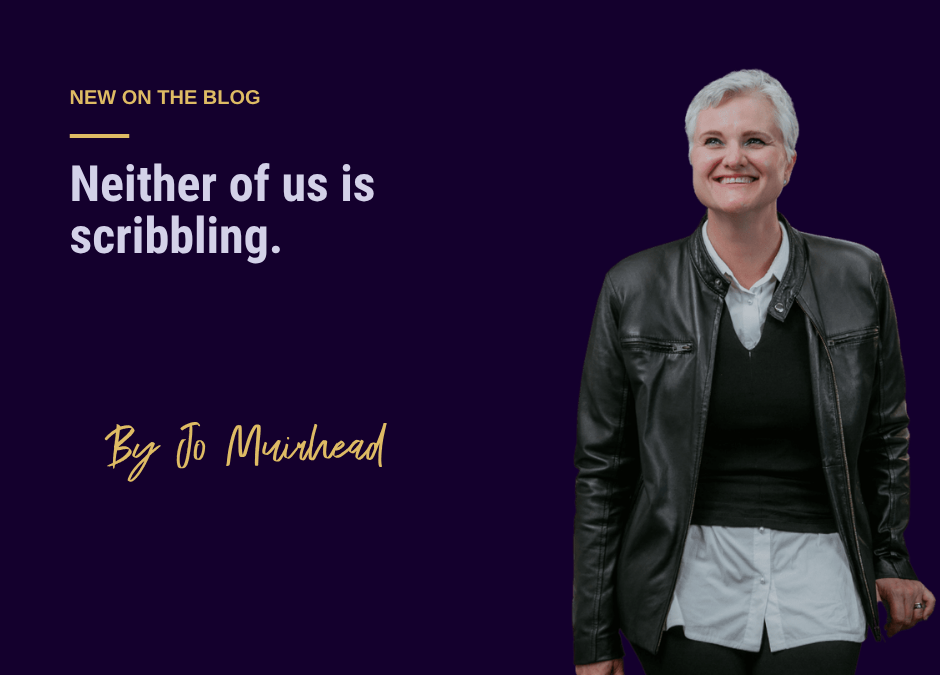
I’m talking with you. You’re talking with me. Neither of us is scribbling.
Nobody is worrying about whether the right thing got written down at the right time. We’re just thinking together.
That’s a deliberate choice, and AI is part of it. I think you deserve to hear about that from me rather than wonder.
Why I work this way
I live with a chronic neurological illness. My capacity fluctuates. Some days are steady. Some aren’t. I don’t always get to choose which one I get.
I’ve been open about this, and I’ll keep being open, because it shapes how I work. My best thinking happens in a couple of hours in the morning, and that’s when my coaching calls live. Everything else fits around that, or waits.
For a long time, the heavy, frustrating parts of my work were competing for the same brain I needed for you. The notes. The summaries. The action plans. Keeping my calendar from quietly eating the hours I’d protected.
Capacity before productivity. I say it to clients. I had to apply it to myself.
What happens in a call
At the start, we talk about notes: who’s taking them and who’s responsible for what. Often I’ll hand that to you, because it’s your information and you’re the one who will act on it. You’re also free to say no to a recording, and some people do.
If you’re comfortable with one, I use the transcript to create a summary and action plan built around what we set out to do. Before we finish, we agree on the main themes and the next steps. You get everything: the video, the transcript, the summary and the plan. I also use it to prepare for our next session, so I walk in already knowing where we left off.
You can take it into your own AI too, to help turn it into action.
The rest of my week
I also use AI to protect my best hours, so other things don’t drift into them.
It doesn’t generate my ideas. They’re mine. I use it to help structure them, to think through what they mean, and to ask me questions. I’ve taught it to ask the ones I usually only allow very trusted people to ask.
Here’s something I didn’t expect. It doesn’t get defensive when I do. (I do get defensive.) It also helps me schedule my content, which has made me more consistent, and more accurate the first time.
Where it stops
AI doesn’t touch my financial data. It can’t get into my bank accounts, my passwords or my password manager.
I’ve turned off the setting that lets my conversations be used to train future versions of Claude. I’d rather tell you what I do than promise what a tool will never do.
What can still go wrong
AI can agree too easily, which is why I’ve taught mine to push back. And it makes mistakes. So do I. I’ve found typos that AI kept, or that neither of us saw.
Typos are part of my life. I’m still the one responsible for what goes out.
What I hope you take from this
Not that AI makes me better than I am. Only that I’m using it so the human parts of the work, the listening, the judgement and the questions, get the best of me.
I’m curious to know how much you know about how the people you work with use AI.